Projects

02Shadow Builders

Shadow Builders follows the people who physically build cities and remain unnamed in them.

In Albanian folk practice, masons could wall in the shadow of the first person to pass the site the morning after the first stone was laid, so that the building would stand. That person, it was believed, would die within forty days, and the shadow would return to the building. Every building holds someone it does not name.

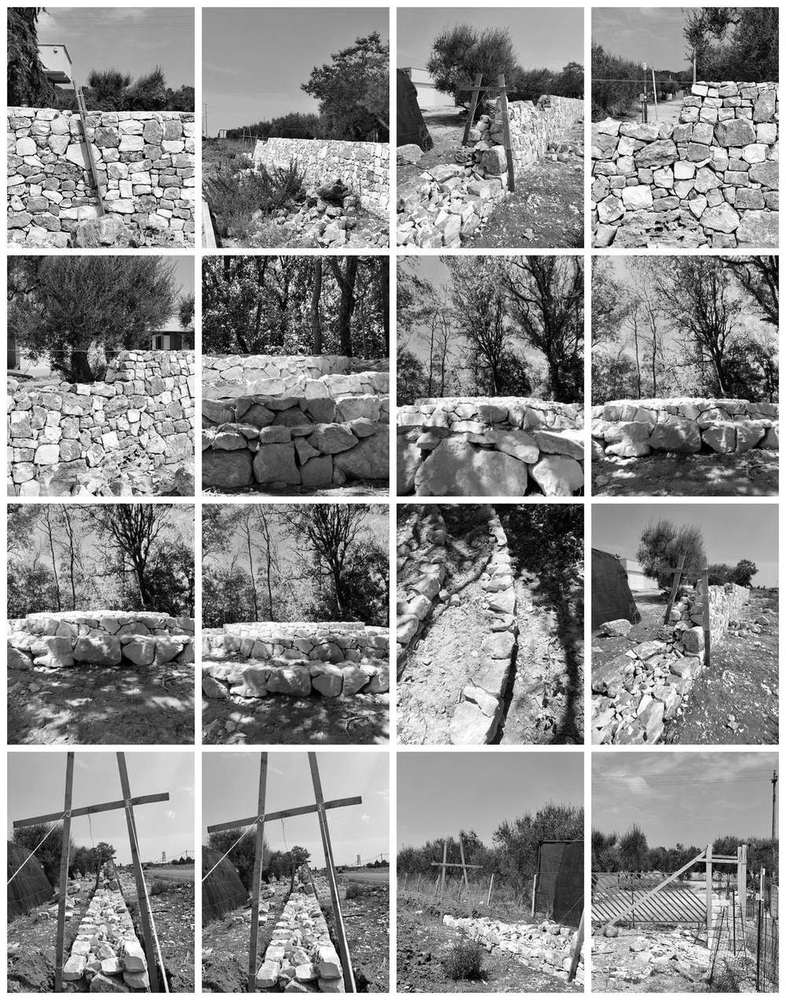
Dry-stone walls under construction and finished, with guide frames and strings
Dry-stone walls under construction and finished, with guide frames and strings. Puglia, 2025–2026 © TRAUMRAUM
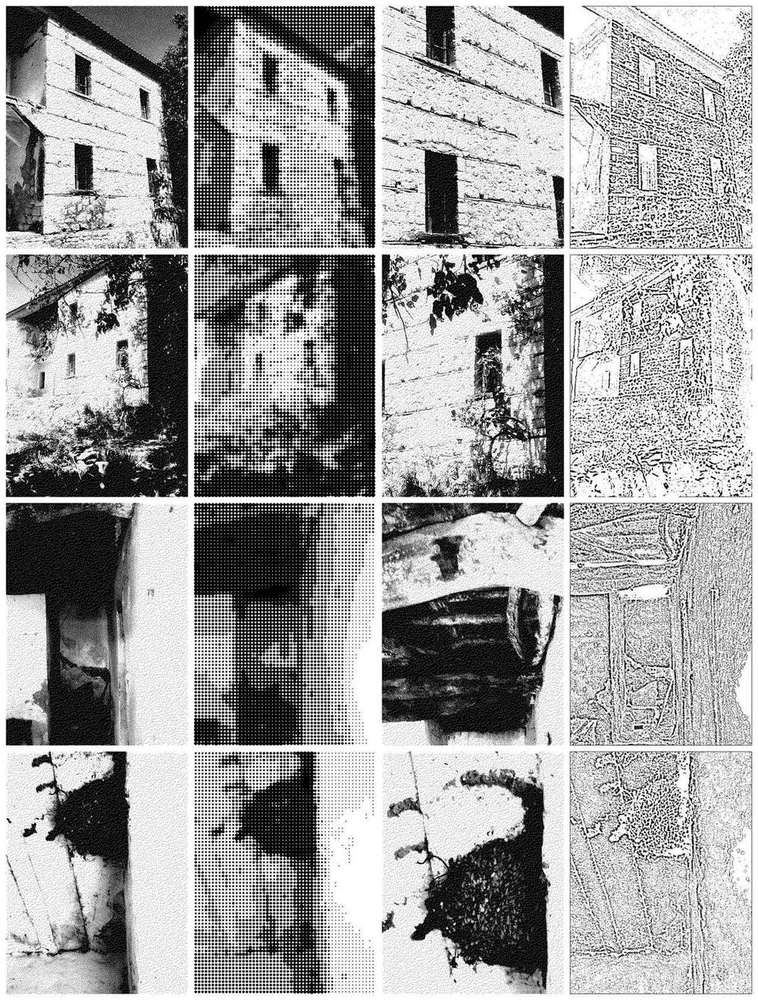
The Shehaj house in Kutë, four photographs in four treatments: contrast, halftone, detail, line
The Shehaj house in Kutë, four photographs in four treatments: contrast, halftone, detail, line. Studies for SB01, 2024–2026 © TRAUMRAUM
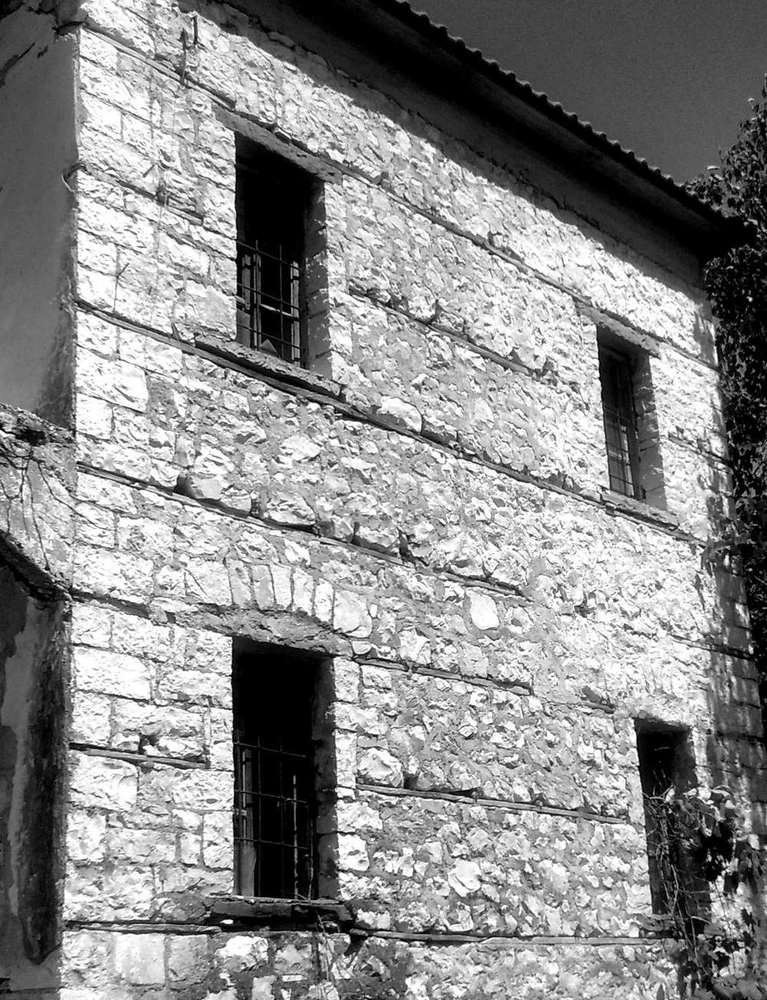
The house of my grandparents Sherif Shehaj and Hyrie Shehaj, niece of Nelo Drizari, in Kutë, Mallakastër
The house of my grandparents Sherif Shehaj and Hyrie Shehaj, niece of Nelo Drizari, in Kutë, Mallakastër. After it was bombed in the Second World War, my grandfather rebuilt it with three Italian deserters he had hidden in his home, Angelo, Cesare and Luchino; they helped him as a way of thanking him. Their surnames are not remembered. Cesare and Angelo made it home; Luchino was lost on the way back, perhaps dead. After the war, people came from Italy to Kutë to ask my grandfather about him. The family also hired a master builder from Gollobordë, in Dibër, called Osman; he built the chimney (oxhak), and my father, as a child, asked him to draw a star on it. My father Ruzhdi was born in this house and lived here until he was fourteen. Today it is uninhabited. Wooden bands (breza druri) run through the stone wall. Photo 2024 © TRAUMRAUM
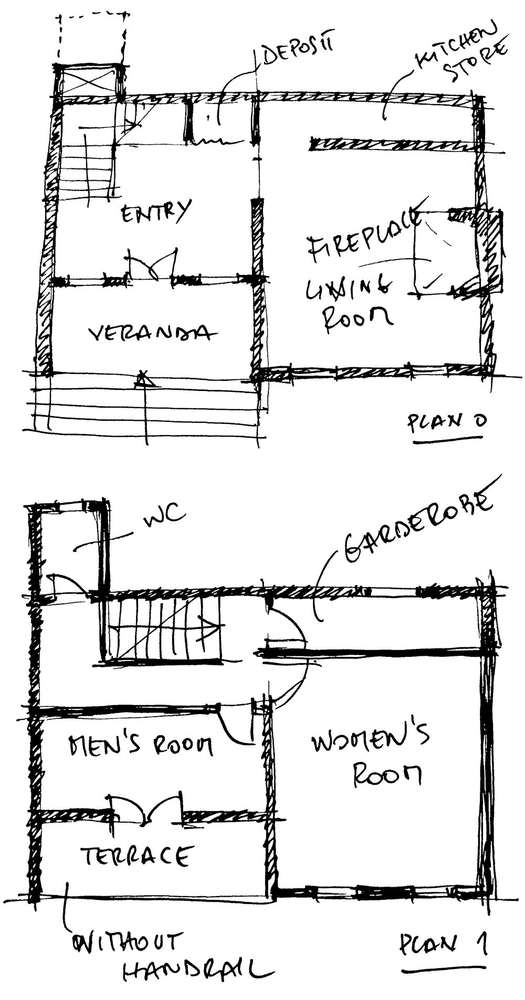
The house in Kutë drawn from memory, as I knew it from childhood visits to my grandmother
The house in Kutë drawn from memory, as I knew it from childhood visits to my grandmother. Ground floor: entry, veranda, deposit, kitchen store, and the living room with the fireplace. First floor: men’s room, women’s room, garderobe, WC, and a terrace without handrail. Drawing 2024 © TRAUMRAUM
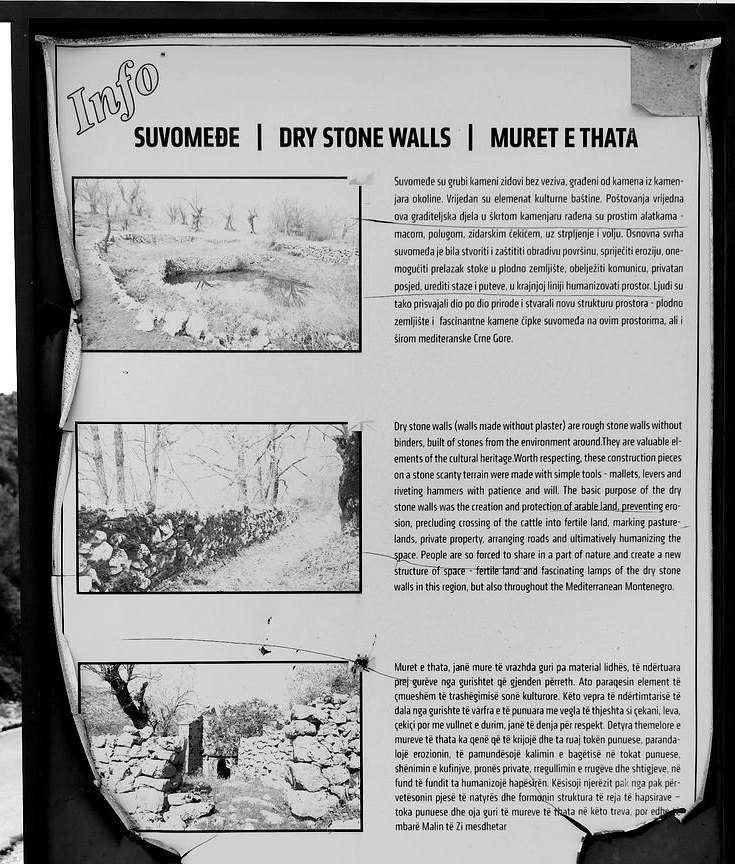
Information panel on dry-stone walls in three languages
Information panel on dry-stone walls in three languages. It names the tools, the patience and the purpose, not the builders. Lake Shkodër, Montenegro, 2025 © TRAUMRAUM
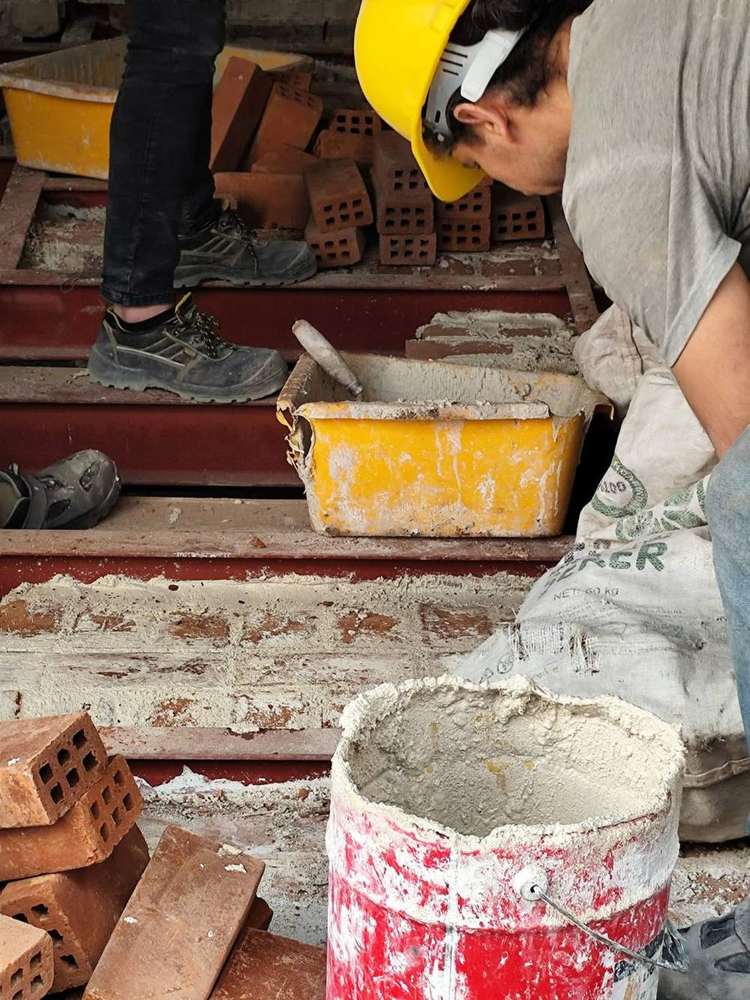
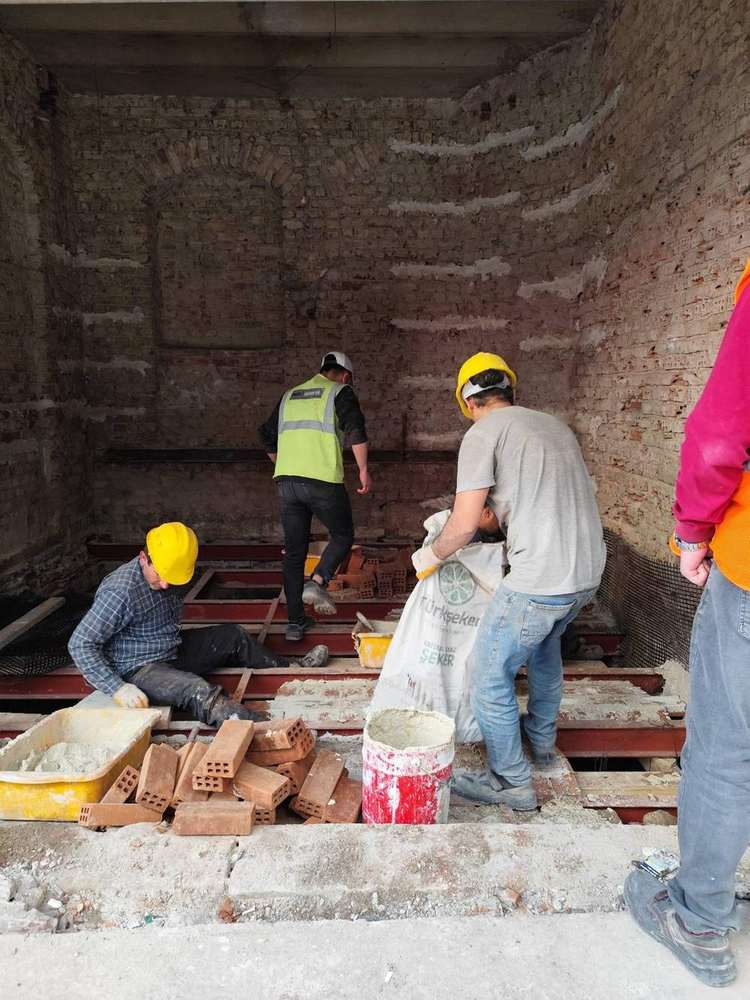
Albanian workers on a building site in Istanbul
Albanian workers on a building site in Istanbul. They spoke “purisht”, only Albanian. Photo: Anila Shehaj, field work, April 2025.
Lifting a sack of mortar, building site in Istanbul
Lifting a sack of mortar, building site in Istanbul. Photo: Anila Shehaj, field work, April 2025.
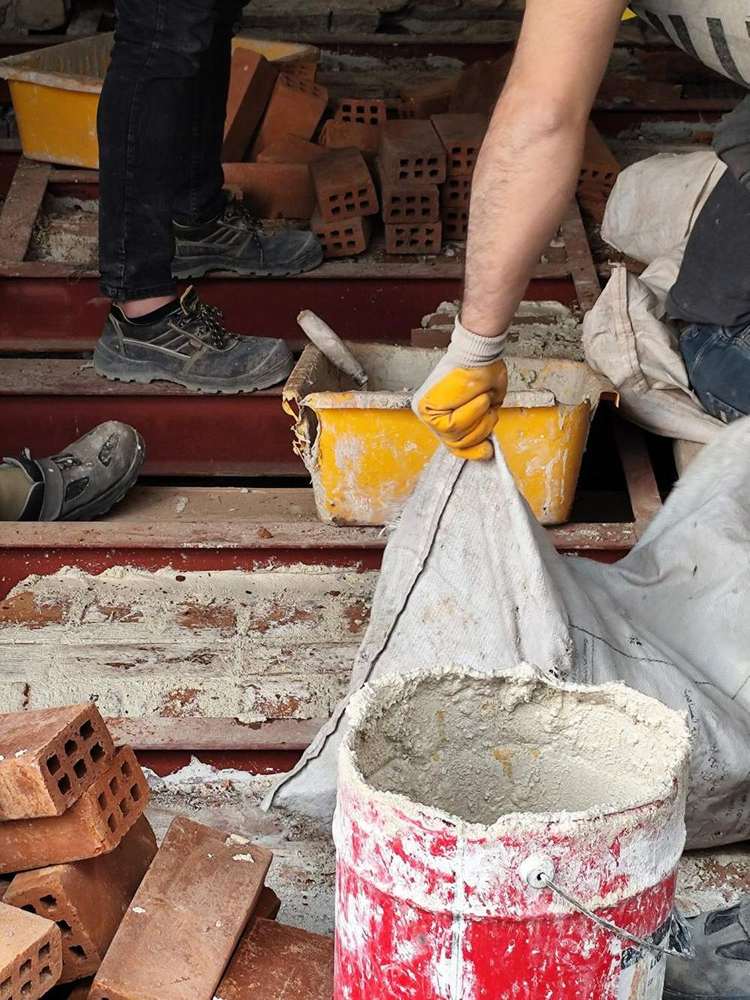
Carrying a sack of mortar, building site in Istanbul
Carrying a sack of mortar, building site in Istanbul. Photo: Anila Shehaj, field work, April 2025.
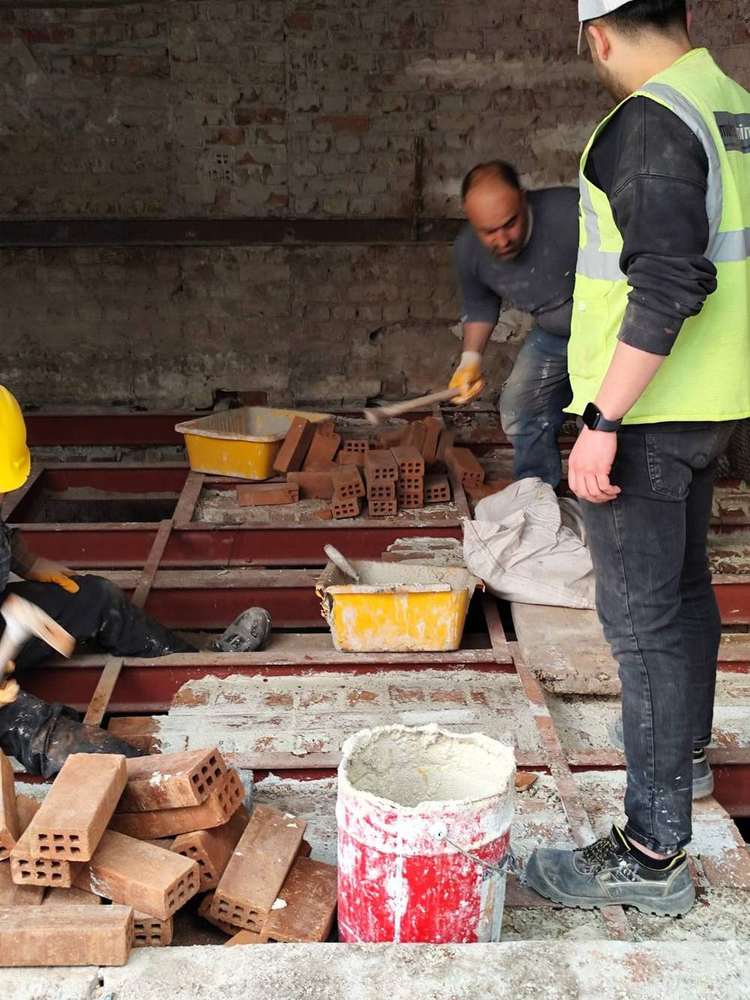
Bricks and mortar between the steel beams, building site in Istanbul
Bricks and mortar between the steel beams, building site in Istanbul. Photo: Anila Shehaj, field work, April 2025.

Prapa Diellit, “behind the sun”, is the Albanian title of the research. It follows construction workers abroad: their lives, the bureaucratic mechanisms they move through, and the everyday life lived far from where they come from. “Behind the sun” is the distance, the journey west towards work and the building of new cities, and the invisibility of what they built in them.

I start from the villages and follow the builders to where they work. In Acquaviva delle Fonti, in Puglia, I interview a man who builds dry-stone walls and trulli. He tells me he is from Durrës. In Berlin I follow Polish workers who take a Flixbus to come and work.

I go where men live together in houses without families. In the evening they gather in the bars of their compatriots. The bar is the living room they do not have. They drink raki brought in secretly and sold under the counter.

I also interview my father, relatives and other people. I was born in Albania, so I listen as an insider. They trust me. It can also hide from me what everyone takes for granted.

The research follows two lines. The shadow: how anonymity is produced, by builders who could not write their names, by registers that counted them only to control them, by agreements made by word of mouth. And the squad: groups of around twenty men from the same villages of Dibër, Opar, Lunxhëri and Mokër, who left every season for Istanbul, Thessaloniki or Constanța, and who today repair the dry-stone walls of Puglia.

The masters of Opar. Opar was one of the best-known areas of Albania and the Balkans for building skill. Every autumn groups of fifteen to twenty masters, led by one who made the agreements with the owners, went down to work in Berat, Myzeqe, Vlorë or Durrës, and returned home before summer. Among themselves they spoke purishtja (Purisht, a kind of argot), a secret speech that neither the owners nor the apprentices understood: “Se ke rir gruth skoron”, it is said, meaning “you have built the wall well”. The trade passed from fathers to sons, brothers and cousins.

The ustà, masters and master builders, also entered folk song. One goes:

Usta Gjika çika-çika,
bëre Durrësin si Amerika.
Usta Gjika copa-copa,
bëre Durrësin si Evropa.
Usta Gjika me fustane,
qysh i ngrite këto minare.

Master Gjika, chip by chip, made Durrës like America, like Europe. Master Gjika in a skirt, how did you raise these minarets?


Text

Walled-in Shadows

Hije të murosura · Anila Shehaj

Read the essay

Late in the evening, my son comes to me with the Brothers Grimm tales in his hand and asks for the next story. By chance it is Rapunzel’s night: the girl shut away in a tower with no door but a single window, from which, every night, she lets down her long braids, the only way to meet the prince.

Spellbound by the images and wonders that come alive only in fairy tales, he leaves me for the night’s sleep. I keep reading, but my mind drifts to another Rapunzel, an Albanian one this time, who is walled in alive in a castle.

The details are macabre. The story is thick with a pain justified only by the values it means to pass on: besa, the given word, and above all love of homeland and land, which outweighs the love of a person.

Often the mind finds the strangest roads to reach where the soul feels longing: faraway places like childhood, or the wish to hand pieces of Albania to a six-year-old boy who speaks a limping Albanian. The reasons for this search are many, professional and personal, and I cannot tell clearly where one begins and the other ends. Honestly, I do not care much to justify or disguise the fascination I have for these stories that come from far away and cross every cultural and geographical border.

I found out late that the legend of the walling-up has sisters elsewhere in the Balkans. This pushes me further, in search of the thin threads that tie antiquity to today’s world.

I have lived in Berlin for three years, and the wall is still there, on every corner of the city: like a ghost that will not let go of the imagination, of language, of the attempts to profit from the history it carries. A history updated in an almost cynical way, cut to fit a capitalist society.

Before that I lived for six years in Puglia, in the south of Italy. There I discovered the story of another wall, one that joins. It is the dry-stone wall, an architectural element that gives character to a whole landscape.

Locals told me that this early building technique is still kept alive by “the Albanian squads”, the only ones who can repair and rebuild these old walls today as they once were. Their work costs about 85 euros per cubic metre, but apart from the price and the phone number of some Albanian master builder, nothing else comes to light from this story with distant roots.

Some time ago I learned that “L’arte del muretto a secco” had been declared intangible cultural heritage by UNESCO, a practice shared by eight states: Italy, Greece, Cyprus, France, Spain, Croatia, Switzerland and Slovenia. These institutional accounts rightly list the values and benefits of preserving the technique today. But, as so often happens, an essential fact is passed over: those who keep this old culture alive are, often, the hands of migrants.

When you look for elements or documents that bear witness to these historical and human ties, you find very little. That is perhaps what made me step into this conversation: to draw a human geography of stonemasonry across Albanian territory.

And I begin to think of Berat and Gjirokastër, of Gollobordë and Korçë, of my grandmother’s stone house in Kutë, Mallakastër.

The irony of fate: this house, bombed during the Second World War, was rebuilt by my grandfather, Sherif Shehaj, with the help of three Italian deserters he had hidden there. It still stands, though for years now the vine that climbed up to the balcony has been gone.

These memories from childhood, always a happy part of a life, give me energy for this personal and perhaps stubborn effort: to take apart, somehow, the wall of unjust stereotypes that divides us and takes us away from a shared history, from what Kadare calls the “common cultural substratum” of the peoples the Mediterranean washes.

Anila Shehaj

Lexo esenë

Mbrëmje vonë, im bir, me librin e përrallave të Vëllezërve Grimm në dorë, më afrohet dhe më kërkon historinë e radhës. Rastësia do që të jetë nata e Rapunzelit: vajza e ngujuar në një kullë pa derë, por me një dritare të vetme, nga e cila, çdo natë, lëshon gërshetat e saj të gjatë — e vetmja mënyrë për të takuar princin.

I magjepsur nga imazhet dhe çuditë që vetëm në përralla bëhen të gjalla, Enea më lë për gjumin e natës. Unë vazhdoj të lexoj, por mendja më shkon te një Rapunzel tjetër — shqiptare, në këtë rast — e cila muroset e gjallë në një kështjellë.

Detajet janë makabre. Historia është e dendur me një dhimbje që justifikohet vetëm nga vlerat që synon të përcjellë: besa, fjala e dhënë, dhe, mbi të gjitha, dashuria për atdheun dhe tokën që tejkalon dashurinë për njeriun.

Shpeshherë mendja gjen rrugët më të çuditshme për të arritur aty ku shpirti ndjen mall: te vende të largëta si fëmijëria, ose te dëshira për t’i transmetuar copëza të Shqipërisë një djali gjashtëvjeçar që flet një shqipe të çalë. Arsyet e këtij kërkimi janë të shumta, profesionale dhe personale, dhe nuk arrij të dalloj qartë ku fillon e ku mbaron njëra apo tjetra. Sinqerisht, nuk më intereson aq të justifikoj apo të maskoj mahnitjen që kam për këto histori që vijnë nga larg dhe kalojnë çdo kufi kulturor e gjeografik.

Vonë kam zbuluar se legjenda e murimit ka simotra të tjera në Ballkan. Kjo më shtyn më tej në kërkimin për fijet e holla që lidhin antikitetin me botën e sotme.

Jetoj prej tre vitesh në Berlin dhe muri është ende aty, në çdo cep të qytetit: si një fantazmë që nuk shkëputet nga imagjinata, nga gjuha, nga përpjekjet për të përfituar ekonomikisht prej historisë që mbart me vete. Një histori që përditësohet në mënyrë gati cinike, ashtu siç i shkon për shtat një shoqërie kapitaliste.

Më parë kam jetuar për gjashtë vjet në Puglia, në jug të Italisë. Aty zbulova historinë e një muri tjetër që bashkon. Është muri i thatë: një element arkitekturor i rëndësishëm që karakterizon një peizazh të tërë.

Vendasit më tregonin se kjo teknikë e hershme ndërtimi mbahet ende gjallë nga “skuadrat e shqiptarëve”, të vetmit që arrijnë sot t’i meremetojnë dhe t’i rindërtojnë si dikur këto mure të vjetra. Rreth 85 euro/m3 kushton puna e tyre, por përveç çmimit dhe ndonjë numri telefoni të ndonjë ustai shqiptar, asgjë tjetër nuk del në pah nga kjo histori me rrënjë të largëta.

Kohë më parë zbulova se "L’arte del muretto a secco" ishte shpallur trashëgimi kulturore jomateriale nga UNESCO, si një praktikë e përbashkët e tetë shteteve: Italisë, Greqisë, Qipros, Francës, Spanjës, Kroacisë, Zvicrës dhe Sllovenisë. Në këto tregime institucionale, me të drejtë, renditen vlerat dhe përfitimet e ruajtjes së kësaj teknike sot. Por, siç ndodh shpesh, anashkalohet një fakt thelbësor: ata që e mbajnë gjallë këtë kulturë të vjetër janë, shpesh, duar emigrantësh.

Kur kërkon elemente ose dokumente që dëshmojnë këto lidhje historike dhe njerëzore, gjendet shumë pak. Kjo është ndoshta arsyeja që më bëri t’i hyj këtij muhabeti: për të vizatuar një gjeografi njerëzore të mjeshtërisë së gurit në territorin shqiptar.

Dhe filloj të mendoj për Beratin dhe Gjirokastrën, për Gollobordën dhe Korçën, për shtëpinë prej guri të gjyshes sime në Kutë, Mallakastër.

Ironia e fatit: kjo shtëpi, e bombarduar gjatë Luftës së Dytë Botërore, u rindërtua nga gjyshi im, Sherif Shehaj, me ndihmën e tre ushtarëve dezertorë italianë që ai i kishte fshehur aty. Ajo qëndron ende në këmbë, edhe pse prej vitesh hardhia që ngjitej deri në ballkon nuk është më.

Këto kujtime që më vijnë nga fëmijëria — gjithmonë një pjesë e lumtur e jetës së individit — më japin energji për këtë përpjekje personale dhe, ndoshta, kryeneçe: të shpërbëj disi murin e stereotipeve të padrejta që na ndan dhe na largon nga një histori e përbashkët; nga ajo që Kadare e quan “nënshtresa e përbashkët kulturore” e popujve që i lag Mesdheu.

Anila Shehaj

CategoryResearch
MethodEthnographic and Ottoman historical sources; oral history with family members and with a heritage archaeologist in Berat; photographic survey of dry-stone walls in Puglia
StatusIn progress. First publication, SB01, in preparation
PlaceKutë, Berat, Puglia, Istanbul, Berlin
In AlbanianHije të murosura, Prapa Diellit
Year2024 – ongoing
AuthorAnila Shehaj

Sources

  1. Bitraku, Apostol. Rreth e rrotull në Opar: Vite, njerëz, ngjarje. Tiranë: Argeta–LMG, 2010.
  2. Blumi, Isa. “Adding New Scales of History to the Eastern Mediterranean: Illicit Trade and the Albanian.” In Cities of the Mediterranean: From the Ottomans to the Present Day, edited by Biray Kolluoğlu and Meltem Toksöz. London: I.B. Tauris, 2010.
  3. Ergin, Nina. “Mapping Istanbul’s Hammams of 1752 and Their Employees.” In Bread from the Lion’s Mouth: Artisans Struggling for a Livelihood in Ottoman Cities, edited by Suraiya Faroqhi. New York: Berghahn Books, 2015.
  4. Faroqhi, Suraiya. Artisans of Empire: Crafts and Craftspeople under the Ottomans. London: I.B. Tauris, 2009.
  5. Faroqhi, Suraiya, ed. Bread from the Lion’s Mouth: Artisans Struggling for a Livelihood in Ottoman Cities. New York: Berghahn Books, 2015.
  6. Faroqhi, Suraiya. Travel and Artisans in the Ottoman Empire: Employment and Mobility in the Early Modern Era. London: I.B. Tauris, 2014.
  7. Koolhaas, Rem, AMO, and Harvard Graduate School of Design. Wall. Elements of Architecture. Venice: Marsilio, 2014.
  8. Muka, Ali. Ndërtimet tradicionale fshatare: Monografi etnologjike. Tirana: Akademia e Shkencave, Instituti i Kulturës Popullore, 2007.
  9. Ross, Andrew, ed., for Gulf Labor. The Gulf: High Culture/Hard Labor. New York and London: OR Books, 2015.
  10. Shehaj, Hyrie, niece of Nelo Drizari. Stories told to the author in her childhood, Kutë. Unpublished.
  11. Shehaj, Ruzhdi. Interviews with the author about the house in Kutë, Mallakastër, where he was born and lived until the age of fourteen, 2026. Unpublished.
  12. Shkupi, Fatbardha. “Mjeshtrat popullorë në Berat gjatë shekujve 18–19 dhe fillimit të shek. 20.” Monumentet 2 (1990): 57.
  13. UNESCO. “Art of dry stone walling, knowledge and techniques.” Representative List of the Intangible Cultural Heritage of Humanity, 2018.
  14. Vullnetari, Julie. Albania on the Move: Links between Internal and International Migration. Amsterdam: Amsterdam University Press, 2012.
  15. Wasiucionek, Michał. The Ottomans and Eastern Europe: Borders and Political Patronage in the Early Modern World. London: I.B. Tauris, 2019.

Interviews with migrant workers in the construction sector, ongoing.